Tell your friends about this item:
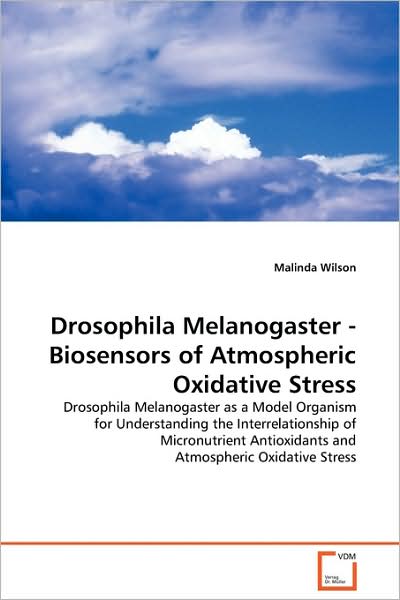
Drosophila Melanogaster - Biosensors of Atmospheric Oxidative Stress: Drosophila Melanogaster As a Model Organism for Understanding the ... Antioxidants and Atmospheric Oxidative Stress Malinda Wilson
Ordered from remote warehouse
Our customers say:


Drosophila Melanogaster - Biosensors of Atmospheric Oxidative Stress: Drosophila Melanogaster As a Model Organism for Understanding the ... Antioxidants and Atmospheric Oxidative Stress
Malinda Wilson
Studies of Drosophila melanogaster have led to molecular insights concerning biomolecular mechanisms of biology and disease including development, differentiation, cancer and aging. Wild-type Drosophila, unlike vertebrate mammals, selectively retains gamma-tocopherol over alpha- tocopherol. Urate-deficient Drosophila compared to wild-type had similar levels of glutathione but only 50% of the ascorbate levels. Dietary supplementation with ascorbate dramatically increased its level while chemically-defined diets led to rapid depletion of ascorbate in both strains. It is concluded that Drosophila do not synthesize ascorbate, and in this respect are similar to humans. Wild-type and urate-deficient Drosophila were continuously exposed to ozone. Exposure of Drosophila to 2 ppm ozone/24hrs/day unmasked a marked sensitivity phenotype of urate-deficient Drosophila. Studies revealed that ascorbate supplementation decreased ozone-induced toxicity in Drosophila. Collectively, these data reveal the usefulness of Drosophila as a model organism for studying micronutrient antioxidants and their interrelationship with ozone-induced toxicity.
| Media | Books Paperback Book (Book with soft cover and glued back) |
| Released | March 12, 2009 |
| ISBN13 | 9783639130621 |
| Publishers | VDM Verlag |
| Pages | 112 |
| Dimensions | 150 × 220 × 10 mm · 176 g |
| Language | English |











![Cover for Jürgen Rous · Humankapitalbewertung Mit Der Saarbrücker Formel - Telekom Austria (Paperback Book) [German edition] (2010)](https://imusic.b-cdn.net/images/item/original/912/9783639245912.jpg?jurgen-rous-2010-humankapitalbewertung-mit-der-saarbrucker-formel-telekom-austria-paperback-book&class=scaled&v=1511258217)
