
Tell your friends about this item:
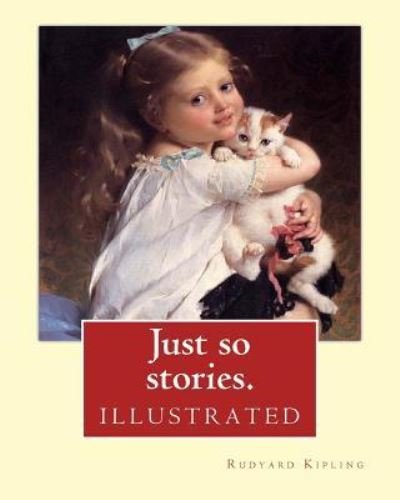
Just So Stories Rudyard Kipling
Our customers say:


Also available as:
- Paperback Book (2008) $ 12.49
- Paperback Book (2011) $ 12.99
- Paperback Book (2014) $ 13.99
- Paperback Book (2017) $ 13.99
- Paperback Book (2018) $ 13.99
- Paperback Book (2018) $ 13.99
- Paperback Book (2010) $ 13.99
- Paperback Book (2017) $ 14.49
- Paperback Book (2016) $ 14.49
- Paperback Book (2017) $ 14.49
- Paperback Book (2015) $ 14.99
- Paperback Book (2017) $ 14.99
- Paperback Book (2017) $ 14.99
- Paperback Book (2015) $ 14.99
- Paperback Book (2017) $ 14.99
- Paperback Book (2012) $ 14.99
- Paperback Book (2016) $ 14.99
- Paperback Book (2016) $ 14.99
- Hardcover Book (1992) $ 14.99
- Paperback Book (2023) $ 15.49
- Paperback Book (2015) $ 15.49
- Paperback Book (2018) $ 15.99
- Paperback Book (2016) $ 15.99
- Paperback Book (2011) $ 15.99
- Paperback Book (2012) $ 15.99
Just So Stories
Rudyard Kipling
Why does a whale eat only small fish. When the whale ate all the fish, the little sly fish described to him all the charm of a human snack and told where to find it, but warned that the man is a restless creature. The whale swallowed the sailor along with his raft and suspenders. In the whale's stomach, the sailor began to run, jump, and generally behave very actively, so that the whale felt unwell. When he asked his prey to get out of his stomach, the sailor promised to think about it if the whale took him home to the white cliffs of Albion. Before going home, the guy inserted a whale into the throat with a grill made of raft boards and suspenders, so that he could only eat very, very small fish. And the sly fish swam away and hid in the mud, under the threshold of the equator, because she was afraid that the whale would get angry with her.
As a hump appeared on the back of a camel. When the land was completely new, the animals that helped the man came to the camel, who lived in the middle of the huge Howling Desert, and tried to attract him to active work, but he answered only hrb and scored them at their request. The animals complained to the gin; when the camel told him his usual hornbeam, he awarded him a hump so that the beast could work 3 days without lunch breaks.
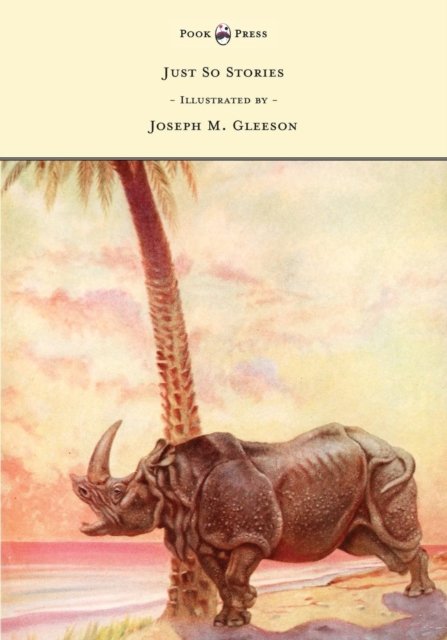
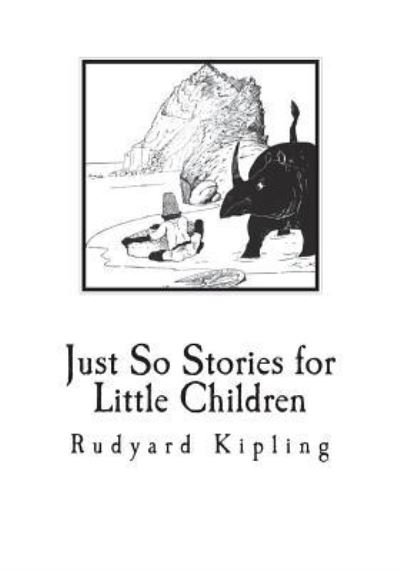
How wrinkles appeared on rhino skin. The Persian fire-worshiper baked sweet bread with raisins, but the rhino drove it onto a palm tree and ate all the bread. When the rhino took off all its smooth skin and went for a swim, a man poured stale crumbs and burnt raisins into it. To get rid of tingling, the rhino began to rub against a palm tree, but only rubbed the folds and completely erased the buttons.
How a leopard became spotted. All animals lived in the High Feldt desert, where hunters were easily found: humans and leopards. To protect themselves, the animals went into the forest and acquired camouflage stripes and spots. The wise Babun advised the leopard to get spots, and the Ethiopian also to make changes in his appearance. In the forest they caught a zebra and a giraffe; they showed hunters why they can hear and smell animals, but they don't see. Ethiopian turned black and covered the leopard with 5 fingerprints.
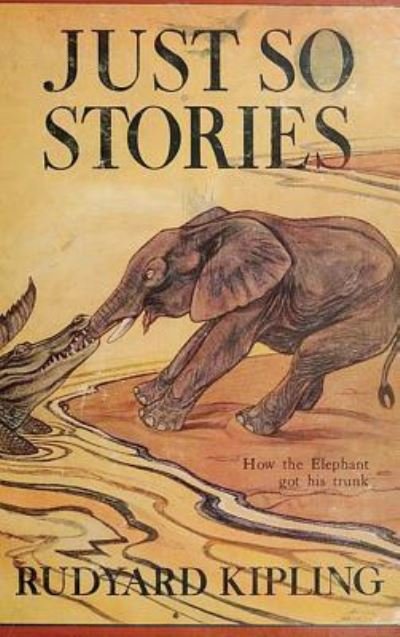
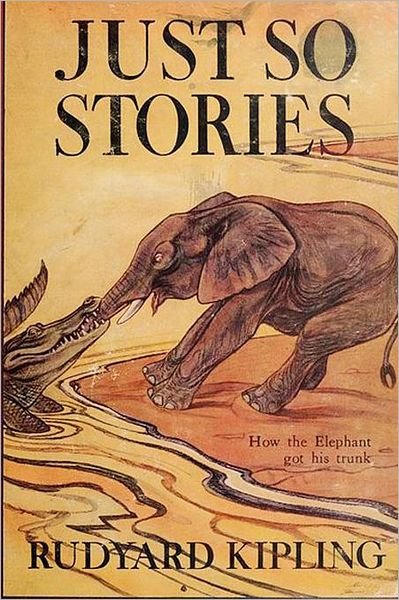
Elephant child. When the elephants did not have a trunk, a curious elephant asked many questions, for which it was repeatedly beaten. Finally, he wanted to know what the crocodile dined with. With this question he turned to the crocodile; he grabbed his nose and began to draw him into the water. Python pulled a curious baby by its hind legs, but the elephant's nose remained elongated. He could get bananas for them, as well as chop all those who had previously opened their paws.
The request of the old kangaroo. The kangaroo, who at that time had a fluffy skin and short legs, asked the three gods to make him unlike the others, and that everyone would know about him by 5 o'clock in the evening. He got so one of the gods that he asked the dingo to chase a kangaroo. As a result, the hind legs of the kangaroo stretched out to make it more convenient to jump. But he refused to thank the dingo for acquiring the kangaroo.
How armadillos appeared. Jaguarikha told her inexperienced son about a hedgehog (it needs to be thrown into the water to turn around) and a turtle (it is better to scratch it out of the shell), but they managed to confuse the nonsense, who, as a result of hunting, only hurt his paw. To escape, the turtle began to learn to curl up, and the hedgehog to swim. As a result of training, the tortoise's guards parted, and the hedgehog's needles stuck together. Jaguarich advised her son to leave them alone and called the new animals armadillos.
| Media | Books Paperback Book (Book with soft cover and glued back) |
| Released | April 3, 2021 |
| ISBN13 | 9798732382778 |
| Publishers | Independently Published |
| Pages | 156 |
| Dimensions | 152 × 229 × 8 mm · 217 g |
| Language | English |
More by Rudyard Kipling
Show all









More from this series


![Cover for Rudyard Kipling · Just So Stories (Collector's Edition) (Illustrated) (Laminated Hardback with Jacket) (Hardcover Book) [Collector's edition] (2024)](https://imusic.b-cdn.net/images/item/original/279/9781998621279.jpg?rudyard-kipling-2024-just-so-stories-collector-s-edition-illustrated-laminated-hardback-with-jacket-hardcover-book&class=scaled&v=1750749262)


![Cover for Rudyard Kipling · Just So Stories (Royal Collector's Edition) (Illustrated) (Case Laminate Hardcover with Jacket) (Hardcover Book) [Royal Collector's edition] (2021)](https://imusic.b-cdn.net/images/item/original/555/9781774765555.jpg?rudyard-kipling-2021-just-so-stories-royal-collector-s-edition-illustrated-case-laminate-hardcover-with-jacket-hardcover-book&class=scaled&v=1638452761)


![Cover for Rudyard Kipling · Just So Stories - Macmillan Children's Books Paperback Classics (Paperback Book) [Main Market Ed. edition] (2016)](https://imusic.b-cdn.net/images/item/original/587/9781509805587.jpg?rudyard-kipling-2016-just-so-stories-macmillan-children-s-books-paperback-classics-paperback-book&class=scaled&v=1458917780)
![Cover for Rudyard Kipling · Just So Stories - Macmillan Collector's Library (Hardcover Book) [New edition] (2016)](https://imusic.b-cdn.net/images/item/original/800/9781909621800.jpg?rudyard-kipling-2016-just-so-stories-macmillan-collector-s-library-hardcover-book&class=scaled&v=1472257946)

![Cover for Rudyard Kipling · Just So Stories - Wordsworth Children's Classics (Paperback Book) [New edition] (1993)](https://imusic.b-cdn.net/images/item/original/022/9781853261022.jpg?rudyard-kipling-1993-just-so-stories-wordsworth-children-s-classics-paperback-book&class=scaled&v=1393314712)




![Cover for Rudyard Kipling · Just So Stories, Illustrated Edition (Yesterday's Classics) (Paperback Book) [Unabridged edition] (2009)](https://imusic.b-cdn.net/images/item/original/724/9781599151724.jpg?rudyard-kipling-2009-just-so-stories-illustrated-edition-yesterday-s-classics-paperback-book&class=scaled&v=1410858245)
See all of Rudyard Kipling ( e.g. Paperback Book , Hardcover Book , Book , CD and Audiobook (CD) )