Tell your friends about this item:
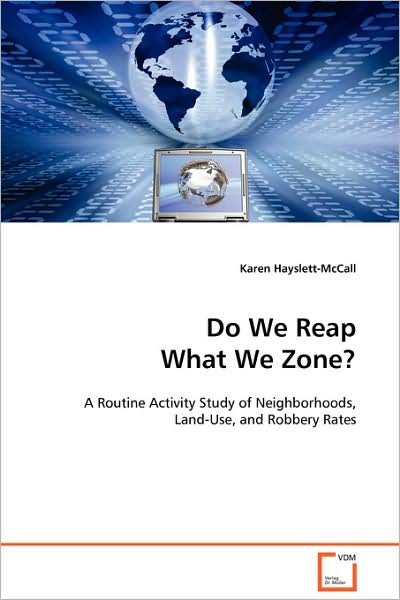
Do We Reap What We Zone?: a Routine Activity Study of Neighborhoods, Land-use, and Robbery Rates Karen Hayslett-mccall
Ordered from remote warehouse
Our customers say:


Do We Reap What We Zone?: a Routine Activity Study of Neighborhoods, Land-use, and Robbery Rates
Karen Hayslett-mccall
Routine activity theory suggests that neighborhood-level activity patterns influence crime rates, and that the convergence of three elements in space and time¿a motivated offender, a suitable target, and the absence of a capable guardian¿result in increased likelihood of criminal events. As such, particular land-use patterns may explain why disadvantaged neighborhoods have higher crime rates than more advantaged areas. This monograph examines whether the effect of neighborhood disadvantage on crime may be a function of its association with land-use patterns. This research also examines whether land-uses have greater effects in disadvantaged neighborhoods. By understanding the effects of land-use, planners and managers could make changes in land-use patterns that decrease crime rates. Findings reveal that both social characteristics and several land-use patterns exhibited different degrees of influence within three research sites. Generally, the percent of land-use dedicated to commerce as well as some commercial institutions were significant predictors of robbery rates. However, types of commercial land and establishments varied by the study site.
| Media | Books Paperback Book (Book with soft cover and glued back) |
| Released | December 1, 2008 |
| ISBN13 | 9783639103465 |
| Publishers | VDM Verlag Dr. Müller |
| Pages | 140 |
| Dimensions | 150 × 220 × 10 mm · 195 g |
| Language | English |


![Cover for Beate Pottmann-knapp · Tiergestützte (Psycho)therapie: Wissen Für Diagnostik, Behandlung, Therapie, Prävention, Salutogenese, Resilienz, Förderung, Entwicklung, Begleitung (Paperback Book) [German edition] (2013)](https://imusic.b-cdn.net/images/item/original/369/9783639409369.jpg?beate-pottmann-knapp-2013-tiergestutzte-psycho-therapie-wissen-fur-diagnostik-behandlung-therapie-pravention-salutogenese-resilienz-forderung-entwicklung-begleitung-paperback-book&class=scaled&v=1416425000)